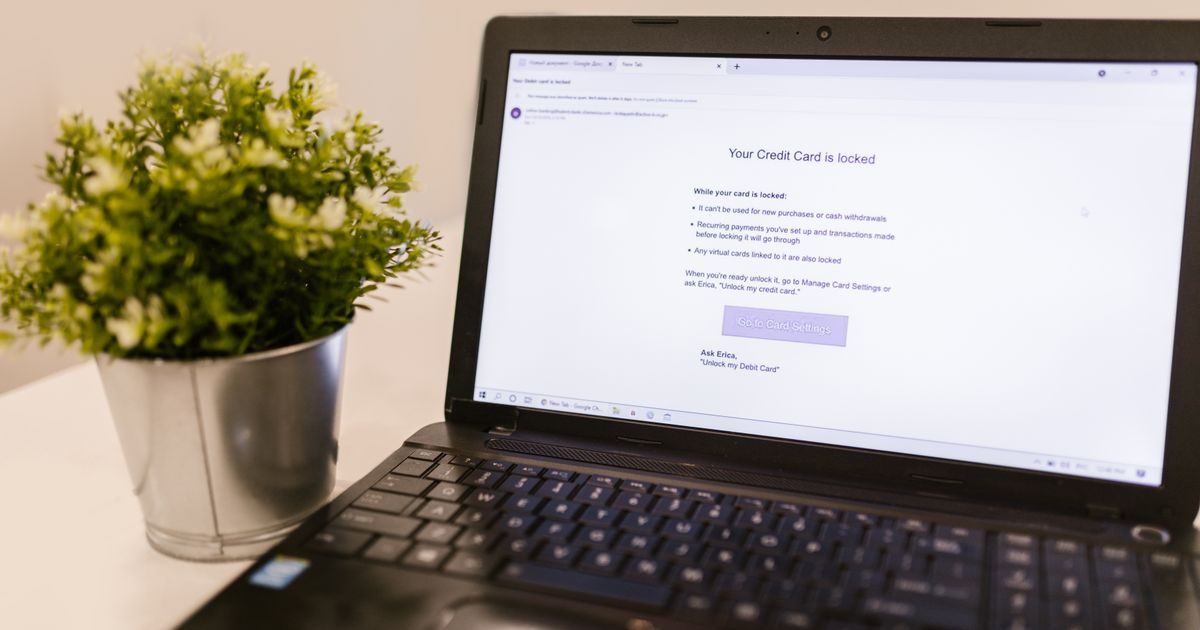
An email mailbox is the dedicated storage space on a mail server where all messages sent to a specific email address are deposited. Think of it as a digital locker: the postman (the sending server) drops the envelope there, and you pick it up when you open your email client.
Understanding how this mailbox works helps you make smarter decisions about storage, multi-device access, and choosing between IMAP and POP3.
Anatomy of an Email Mailbox
When you sign up for a custom-domain email account, your hosting provider creates a set of files and folders on the server linked to your address. That's your mailbox in a nutshell.
The main components:
- Inbox: the default folder where new messages land.
- System folders: Sent, Drafts, Trash, Spam — created automatically by the server or the client.
- Custom folders: ones you create to stay organized (Clients, Invoices, Projects, etc.).
- Storage quota: the disk space limit assigned to that address, measured in MB or GB.
On Linux servers (by far the most common in shared hosting), messages are stored in Maildir format (one file per message) or mbox format (all messages in a single file). Maildir is the current standard due to its better robustness and performance.
The Journey of an Email to Your Mailbox
To understand the mailbox, it helps to trace a message's full path:
- Sending: your email client (Outlook, Thunderbird, mobile app) connects to the outgoing SMTP server and hands off the message.
- Routing: the SMTP server looks up the destination domain's MX records in DNS to find the correct receiving server.
- Delivery: the sending SMTP server connects to the destination MX server and transfers the message.
- Storage: the destination MX server writes the message to the recipient's mailbox (a file or folder on disk).
- Retrieval: the recipient opens their email client, which connects via IMAP or POP3 to the server and downloads or syncs the messages.
The mailbox lives at step 4: it's the resting point where the message waits to be read.
IMAP vs POP3: How You Access Your Mailbox
This is where many users get confused. IMAP and POP3 define how your device retrieves messages from the server mailbox.
| Feature | IMAP | POP3 |
|---|---|---|
| Where messages live | On the server (client shows a synced view) | Downloaded to the device and (by default) deleted from the server |
| Multi-device access | Yes — all devices see the same state | Not recommended (each device downloads different messages) |
| Folder sync | Yes | Inbox only |
| Server quota usage | Consumes quota while messages remain on server | Frees quota once messages are downloaded and deleted |
| Ideal use case | Work email, access from PC + phone + webmail | Local archiving, slow connections, very tight quota |
In 2026, IMAP is the recommended standard for virtually all business use cases. POP3 is reserved for very specific local-archiving scenarios.
For more context on these and other email protocols, browse our guides in the business email section.
Mailbox Quota: What It Is and How to Manage It
Every mailbox has a storage limit. When you hit it, the server rejects incoming messages with an error like 452 4.2.2 Mailbox full.
To keep quota under control:
- Empty your Trash and Spam regularly. These are the folders that silently consume the most space.
- Archive or download large attachments. A single email with a 25 MB PDF can represent 5% of a 500 MB mailbox.
- Set up retention policies. On enterprise platforms (Google Workspace, Microsoft 365) you can automate deletion of old messages.
- Upgrade your plan if usage is legitimate. It's not worth spending hours deleting emails if your actual business volume genuinely needs more space.
Mailbox Security: Encryption in Transit and at Rest
The mailbox doesn't just store messages — it's also a target for attackers. The key protection layers are:
- TLS in transit: the connection between your client and the server (IMAP/SMTP) must be encrypted with TLS. Make sure your client uses the secure ports (IMAP 993, SMTP 465 or 587 with STARTTLS).
- Encryption at rest: enterprise providers encrypt data on disk. This varies in standard shared hosting — ask your provider directly.
- Strong password + 2FA: the most common attack vector is a compromised password. Enable two-factor authentication wherever available.
- Spam filter: the server analyzes messages before depositing them in the mailbox; suspicious ones go to the spam folder.
If you're looking for professional email with your own domain — including TLS, antispam filtering, and a generous quota — the team at elenlace.com has plans designed for businesses of all sizes.
Key Takeaways
- A mailbox is the server-side storage space where messages rest until you read them.
- Messages travel via SMTP (sending and routing) and land in the mailbox via the MX server; you retrieve them with IMAP or POP3.
- IMAP syncs the server mailbox across all your devices; POP3 downloads messages locally and deletes them from the server.
- The quota is the mailbox's storage limit; exhausting it causes incoming mail to be rejected.
- Encrypting connections (TLS) and using strong passwords are the baseline security measures every mailbox needs.
Need a mailbox with your own domain, generous storage, and proper security out of the box? Explore the options at elenlace.com and set up your professional email today.
FAQ
What happens when my mailbox is full?
When the mailbox reaches its quota, the sending server receives a bounce error (typically 452 or 550) and the email is not delivered. The sender usually gets a delivery failure notification. Empty your Trash, delete large messages, or increase your quota to fix it.
Do webmail and a desktop client read the same mailbox?
Yes, as long as you use IMAP. Both webmail (Roundcube, Horde, etc.) and Outlook or your mobile app access the same mailbox on the server. Actions like reading, moving, or deleting messages are reflected across all devices.
Can I have multiple mailboxes for the same domain?
Yes. Each email address ([email protected]) has its own independent mailbox. With a hosting plan you can create as many mailboxes as your plan allows — some offer unlimited mailboxes, others have a maximum count.
What's the difference between a mailbox and an email alias?
A mailbox has its own storage and login credentials. An alias is simply an address that redirects messages to another existing mailbox, with no storage of its own. Aliases are useful for creating additional addresses without consuming extra quota.
Further reading
Other providers and guides worth comparing: